Tuesday, 7 September 2010

Suburban Yokel


Was reading English Heritage's The Heritage Of Historic Suburbs. In it they take a brave stab at defining the suburb as "outgrowths or dependencies of larger settlements - somewhere with a clear relationship with a city or town but with its own distinct character."
Later, they say "understanding how...suburbs work and the role they play in relation to their adjacent urban areas is an important aspect in determining how they should be managed."

While it is interesting to see the dead hand of historical beauracracy descending on the suburb, and especially the inter-war suburb, and English Heritage's acknowledgement of these places as having their "own distinct character", the inter-war suburb I grew up in was much more related, almost exclusively so, to the countryside on its doorsteps; and not the city at all, which was only rarely visited. Also, lots of the older folk and families became suburban because the suburb came out to them, in their villages and farms, and not them moving outwards from a city centre. There were old barns tucked behind houses, old farm gateposts left as playthings in the park, scraps of commons and cottages in our suburb, and fields seen beyond. The city was but a dim, almost alien sensation, well into teenage years.
Even as the barns were demolished and the gateposts removed, their memory remained, as does the tight curve of a street away from the shops, which was once a lane.
It is surprising, then, that English Heritage do not mention once what the suburbs are generally built on and against (the 'country'), as these must be important factors in the sense of there being a "historic environment" of suburbs, as much as, and often more than, the city.

Wednesday, 25 August 2010

A scene to set shepherds dancing in ecstasy


Reading The Fall & Rise Of Reginald Perrin (renamed from The Death Of Reginald Perrin after the first TV series in 1976), a classic of English suburbanism.


There are some fine suburban descriptions and evocations, aswell as treatment of a certain kind of middle-class suburb in the gap between the Oil Crisis and the 3 day week and Thatcher (although she’s coming alright, down the Groves and Drives, in the CJ figure and his sleeping army of suburban shrugging men and women, like Tony Webster).

In Elizabeth and Reggie’s garden bird coasters and “vanishing country crafts” bowls, there is the commodified/idolised recognition by the suburb of what it is built over and against.
Tom’s inappropriate blurtings on things like the “origins of Morris Dancing” show up where this mindset is learnt, forced, not natural (and thus disposable), while CJ represents that aspect of the suburban mind that embraces and celebrates, and is indeed comforted by, the sealing up of the other:

” ‘These old country crafts are dying out,’ said Tom.
‘Not before time,’ said CJ.
‘We can’t agree with you there can we Lindyplops?’ said Tom.
‘All this nostalgia for the past. What this country needs is a bit of nostalgia for the future’ said CJ.”


For CJ “His engine hummed expensively. His headlights emphasised the mystery of woods and hedgerows. But CJ had no eyes for mystery”.
But, where the woods and hedges remain, even in memory, there is still their power.


Snicket – “a passageway between walls or fences”. Reggie goes through one of these on his way to and from the station. I love these places - the nettles, sour smell of willowherbs, grass and wood avens, the hidden sounds of mowers and pressure sprayers, breeze blocks, dog-shit and stink of creosote – sometimes vestiges of rights of way chopped and like ‘cut-along-here’ lines across the suburb.

Friday, 13 August 2010

Suburban Estates & The Common Estate


To the CCA and the new Simon Yuill exhibition 'Fields, Factories & Workshops' and particularly the bit dealing with the building and existence of suburban estates over commons outside Bournemouth. The picture I have found here, of West Howe, shows a bit of the earlier estates under construction, with a newly levelled area of the scrubby common ground ready for new houses.

These commons, incidentally, are said to form part of Thomas Hardy's imagined Egdon Heath in 'Return Of The Native'.


Some slides show the commons - stretching brambles, yellow, damp grass, and tracks, skeletons of cow parsley - pressing up on and attempting to broach the outer garden fences of the estates on a rainy morning. They are at once themselves and the representatives of the other, the outlandish tale, song and superstition out there.


Here is a picture of pigeons being released on the common that backed on to my own childhood suburb - a place of grass snakes, criss crossing tracks through the bracken, dens, a sinister disused railway station, the smells of grass and a felt, to these children, other. That was sensed over our roads in the big, black shiny clouds above the school or in the burning light. There was a magickal 16th century manor house to one side and an old chocolate factory down away beyond another. And a factory rolling out Brain's Faggots.

A fair rolled up in the summer, and still does.

Monday, 2 August 2010

Honeysuckl'd & Moss


Feeling jollier, this is a picture of a mini-garage in a nearby back garden to the fallen trees. It survives in amongst the updatings and fashions of the suburb and has a great covering of moss, a slate roof and honeysuckle up the side, that still, just, has a few rhubarb and custard blooms.

To A Fallen Elm

"Following our intervention M- & M- agreed to fell and/or prune back several overgrown and unsafe trees as residents of S- Drive experienced problems with Sky reception"
(This from our 'community' council).
change till now did never come to thee/For time beheld thee as his sacred dower/And nature claimed thee her domestic tree

The children sought thee in thy summer shade

In the small dip to the side of our house, old trees stood; survivals, because the slope and hollows in which they stood is unbuildable-on, and so they link us to the day of lane and field. Children play happily on ropes slung from their branches and on fallen boughs on the ground they sit, or pick red currants, but
I see a picture that thy fate displays/And learn a lesson from thy destiny/Self interest saw thee stand in freedoms ways/So thy old shadow must a tyrant be
It is important, of course, that tv must be seen. Who can deny, the new enclosers of the land.
With axe at root he felled thee to the ground/And barked of freedom-O I hate that sound/It grows the cant terms of enslaving tools
To go and hack down! petitioning only the self-appointed guardians of community.
We have brought this on ourselves, I am reminded of Winstanley.
No matter - wrong was right and right was wrong/And freedoms brawl was sanction to the song/Such was thy ruin music making Elm/The rights of freedom was to injure thine/As thou wert served so would they overwhelm/In freedoms name the little so would they over whelm/And these are knaves that brawl for better laws/And cant of tyranny in stronger powers/Who glut their vile unsatiated maws/And freedoms birthright from the weak devours
No matter children and crows disappointment, some can watch Nickelodeon.

(quotes from John Clare and our community council)

Monday, 12 July 2010

Now & Then An English Art


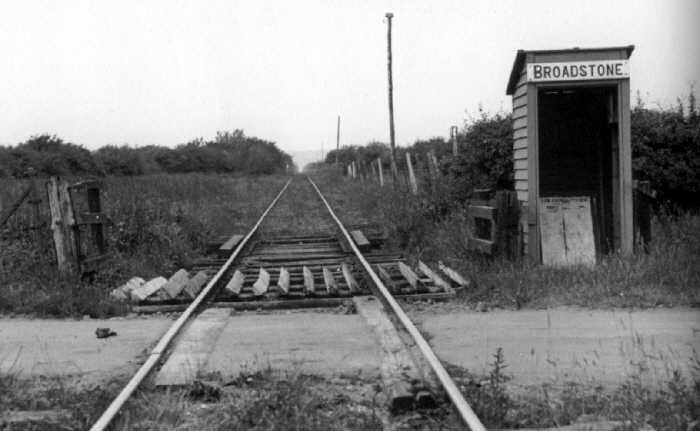
This is a joyous example of english creation - the painstaking, low-key and unselfconscious recreation of an entire railway station, and its temporary installation on the original site on a fine day.
I have also put a picture of the station in 1937. This railway closed in 1940.
Both pictures are taken from a great site about this railway, and a link is given to it in the list on the right.

Sunday, 11 July 2010

Edward Thomas And The Suburbs


Here are two things from Edward Thomas's 'The South Country' (1909):


in a suburb, I have had the same yearning when, on a fine still morning of May or June, in streets away from the traffic, I have seen through the open windows a cool white-curtained shadowy room, and in it a table with white cloths and gleaming metal and glass laid thereon, and nobody has yet come down to open the letters. It all seems to be the work of spirit hands. It is beautiful and calm and celestial, and is a profound pleasure - tinged by melancholy - to see

and

I spent most of my poor earnings on clothes; I took the trouble to talk and smoke and think as much as possible like the other nine young men in the railway carriage that took me into the city; I learned their horrible, cowardly scorn for those who were poor or outlandish, and for all things that were not like those in their own houses or in those of the richer people of their acquaintance or envy. We were slaves, and we gilded our collars

(available from Little Toller books - see the link above)